
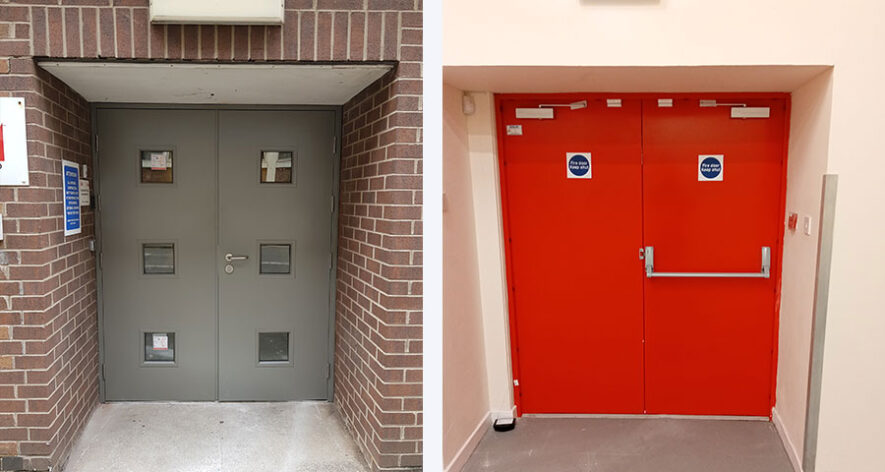

Steel vs. Timber Fire Doors: Which Is Right for You?
Fire doors aren’t just a regulatory requirement — they’re a critical part of your building’s safety strategy. Whether you’re designing a new space or upgrading an existing one, choosing between steel and timber fire doors means weighing performance, aesthetics, and long-term value.
Here’s how they compare:
Material Strength & Durability
Steel Fire Doors
- Built for demanding environments — factories, hospitals, schools, and external access points
- Highly resistant to impact, moisture, and vandalism
- Ideal for areas with heavy foot traffic or exposure to the elements
Timber Fire Doors
- Strong and reliable, especially in internal settings
- Naturally insulative, with good acoustic and thermal properties
- Available in a wide range of finishes to suit residential, commercial, and heritage interiors
Summary: Steel excels in durability and resilience. Timber offers versatility and warmth for internal spaces.
Fire Resistance Ratings
Both steel and timber doors can meet UK fire ratings such as FD30 and FD60. However:
- Steel doors can achieve ratings up to FD240 (4 hours)
- Timber doors typically range from FD30 to FD90
Summary: Steel provides extended protection where time is critical. Timber meets most internal fire safety needs.
Cost & Maintenance
Initial Cost
- Timber doors are generally more affordable upfront
- Steel doors may cost more initially, especially at higher ratings
Long-Term Maintenance
- Timber requires regular checks and refinishing, but repairs are often straightforward
- Steel is low-maintenance and durable, though damage may require full replacement
Summary: Timber suits budget-conscious projects with manageable upkeep. Steel offers long-term value in high-risk or high-traffic zones.
Design & Aesthetic Flexibility
Timber Fire Doors
- Available in bespoke finishes, veneers, and paint options
- Compatible with heritage buildings and design-led interiors
- Easily matched to existing joinery and décor
Steel Fire Doors
- Sleek, modern profiles available — especially in commercial-grade finishes
- Best suited to utilitarian or industrial settings
- Increasingly available in powder-coated colours and minimalist designs
Summary: Timber leads in aesthetic flexibility. Steel is evolving, with more design options than ever before.
Which One’s Right for You?
| Setting | Recommended Material |
| Internal offices, flats, corridors | Timber |
| External doors or service areas | Steel |
| Plant rooms, server rooms | Steel |
| Heritage or design-led buildings | Timber |
| Escape routes (high-risk zones) | Steel or Timber (based on rating and layout) |
Bottom line: Both timber and steel fire doors are safe, compliant, and effective — the right choice depends on your building’s layout, usage, and design priorities.
Need Help Choosing?
Once your fire risk assessor has identified the fire zones and performance requirements, we can help you select the right door for each location. Whether it’s a durable steel door for a plant room or a stylish timber door for a residential corridor, we’ll make sure it’s:
- Fully certified
- Correctly specified
- Professionally installed
- Compliant with relevant standards
We’ll work with your fire strategy — not replace it — to ensure every door meets its intended purpose and looks the part.
Get in touch for tailored product guidance and specification support.
